

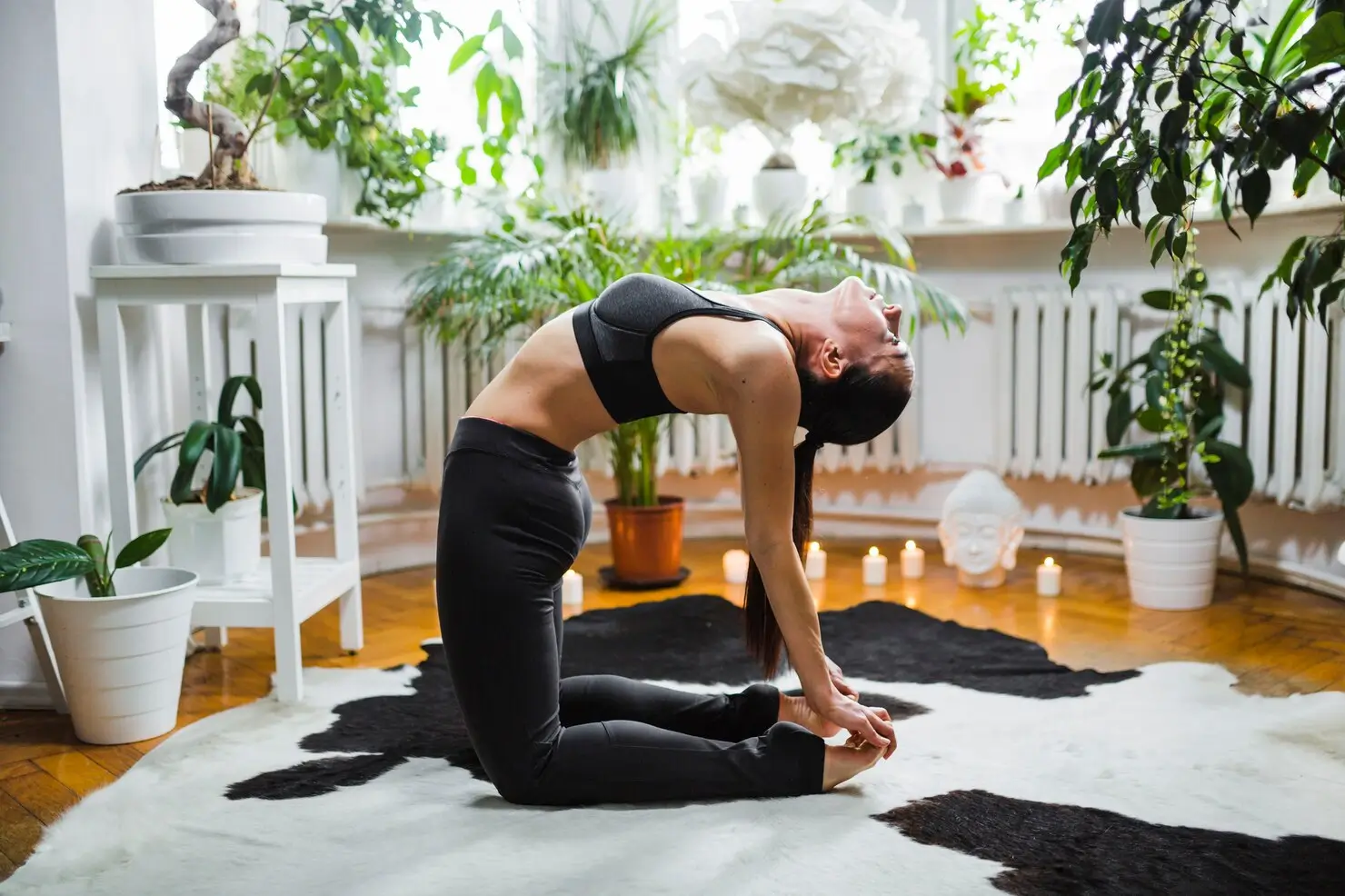
Back pain can make even simple movements uncomfortable, which may lead you to avoid exercise altogether. But for some people, gentle movement can support mobility and help manage chronic low back pain.
Yoga combines controlled movement, stretching, balance, and breathing. Research suggests yoga may help some people with chronic low back pain, although it should not be treated as a cure or a substitute for an evaluation when symptoms are persistent, severe, or associated with neurological symptoms.
The key is choosing movements that match your symptoms and practicing them without forcing your body into painful positions.
Can Yoga Help With Back Pain?
Yes, yoga may help some people manage chronic low back pain by combining mobility work, physical activity, and controlled movement. The American College of Physicians includes yoga among non-drug treatment options for chronic low back pain. However, research on yoga varies in quality, and results can differ depending on the individual, the type of yoga, and the cause of the back pain.
Yoga may be most useful as part of a broader approach rather than as a stand-alone treatment.
Related Read: Lower Back Pain Treatment
8 Yoga Poses for Back Pain
Not every pose is appropriate for every type of back pain. Start slowly, avoid forcing your range of motion, and stop if a movement clearly increases your symptoms.
1. Cat-Cow
Cat-Cow gently moves the spine between flexion and extension.
How to do it:
- Start on your hands and knees with your hands under your shoulders.
- Slowly round your back while gently tucking your chin.
- Then move gradually into a comfortable arch while lifting your chest.
- Repeat slowly for several breaths.
The goal is controlled spinal movement, not achieving the largest possible range of motion.
2. Child’s Pose
Child’s Pose can provide a gentle stretch through the back and hips.
How to do it:
- Begin on your hands and knees.
- Slowly move your hips toward your heels.
- Extend your arms forward or rest them alongside your body.
- Keep the position comfortable and avoid forcing your hips toward your heels.
If this position increases back or hip pain, use a pillow or folded blanket for support or choose another movement.
3. Supine Knee-to-Chest
This pose gently brings the hip toward the torso while lying on your back.
How to do it:
- Lie on your back with your knees bent.
- Bring one knee toward your chest.
- Hold it comfortably without pulling aggressively.
- Return the leg to the starting position and repeat on the other side.
You can also bring both knees toward the chest if that position feels comfortable.
4. Sphinx Pose
Sphinx Pose introduces a gentle spinal extension while keeping the body supported by the forearms.
How to do it:
- Lie on your stomach.
- Place your forearms on the floor with your elbows near your shoulders.
- Gently lift your chest while keeping your pelvis and legs relaxed.
- Hold only within a comfortable range.
This pose is not appropriate for everyone. If extension increases your back or leg symptoms, skip it.
5. Pelvic Tilts
Pelvic tilts use small, controlled movements rather than a deep stretch.
How to do it:
- Lie on your back with your knees bent and feet flat.
- Gently tighten your abdominal muscles.
- Slowly tilt your pelvis so your lower back moves closer to the floor.
- Relax and repeat.
The movement should be subtle. You do not need to press your back forcefully into the floor.
6. Bridge Pose
A supported bridge can combine hip movement with strengthening of the muscles around the hips and trunk.
How to do it:
- Lie on your back with your knees bent and feet flat.
- Keep your feet about hip-width apart.
- Tighten your abdominal and gluteal muscles.
- Slowly lift your hips.
- Lower back down with control.
If bridging causes sharp pain or increases symptoms traveling into the leg, stop and seek professional guidance.
7. Supine Figure-Four Stretch
This pose targets the hips and gluteal muscles rather than directly stretching the lower back.
How to do it:
- Lie on your back with both knees bent.
- Place one ankle across the opposite thigh.
- Gently draw the supporting leg toward you.
- Hold the stretch without forcing it.
Because hip mobility can affect how the lower back moves, a comfortable hip-focused stretch may be useful for some people with back discomfort.
8. Standing Mountain Pose
Mountain Pose is a simple way to practice standing alignment and body awareness.
How to do it:
- Stand with your feet comfortably positioned.
- Keep your knees relaxed rather than locked.
- Let your shoulders rest naturally.
- Maintain a neutral, comfortable spinal position.
- Breathe slowly for several cycles.
The purpose is not to create a rigid “perfect posture.” Instead, focus on comfortable alignment and controlled breathing.
How to Sequence Yoga for Back Pain
The order of poses can matter. A back-pain yoga routine should generally progress from gentle movement to more demanding positions rather than beginning with intense stretching. A simple sequence could be:
- Cat-Cow: Gentle spinal movement.
- Pelvic Tilts: Controlled trunk movement.
- Supine Knee-to-Chest: Gentle hip and back mobility.
- Supine Figure-Four: Hip-focused stretching.
- Bridge Pose: Controlled strengthening.
- Sphinx Pose: Gentle extension, if comfortable.
- Child’s Pose: Relaxation and gentle stretching.
- Mountain Pose: Finish with comfortable standing alignment
You do not need to perform all eight poses every time. If a movement aggravates your symptoms, leave it out rather than pushing through it.
How to Practice Yoga Without Making Back Pain Worse
Yoga should challenge your movement, not cause significant pain. Keep these guidelines in mind:
- Start with a short session, you can gradually increase duration as your body adapts.
- Move slowly, controlled movement is more important than reaching a deep position.
- Do not force a stretch, a stronger stretch is not necessarily a better stretch.
- Modify poses when needed, props such as pillows, blocks, or folded blankets can make positions more comfortable.
- Pay attention to symptoms afterward, temporary muscle soreness is different from worsening or radiating pain.
- Stop if symptoms become sharper or begin traveling down an arm or leg.
- Do not use yoga to push through an unexplained injury.
Research generally suggests yoga has a reasonable safety profile when appropriately practiced, but temporary increases in back pain can occur. Yoga should therefore be adapted to the person’s symptoms and physical condition.
When Should You Avoid Yoga and Get Your Back Pain Evaluated?
Yoga is not appropriate for every episode of back pain. Consider getting a professional evaluation before continuing exercise if your pain:
- Started after a significant injury or accident.
- Is severe or progressively worsening.
- Travels into the buttock or leg.
- Causes numbness, tingling, or weakness.
- Interferes with normal walking or daily activities.
- Continues or repeatedly returns despite self-care.
New bowel or bladder problems, significant weakness, or numbness around the groin or saddle area require urgent medical attention.
If you have a known condition such as a herniated disc or sciatica, the safest exercises may depend on your symptoms and examination findings.
Related Read: When to See a Chiropractor for Back Pain
Yoga vs. General Stretching for Back Pain
Yoga and stretching overlap, but they are not exactly the same. A general stretching routine may focus primarily on lengthening specific muscles. Yoga combines stretching with controlled movement, balance, breathing, and body awareness.
That distinction matters for back pain because simply stretching a painful area is not always the right approach. The appropriate movement depends on what is contributing to the symptoms.
Final Thoughts
Yoga can be a useful form of movement for some people with chronic low back pain, particularly when practiced gently and consistently. But the goal should not be to force flexibility or push through pain.
Start with comfortable movements, modify poses when necessary, and stop when an exercise clearly worsens your symptoms. If your back pain is persistent, recurrent, or accompanied by numbness, weakness, or radiating pain, an evaluation can help identify the appropriate approach.
This article is for educational purposes only and is not a substitute for professional medical advice. Consult your healthcare provider for personalized evaluation.
FAQs
Is yoga good for lower back pain?
Yoga may help some people with chronic lower back pain, particularly as part of an overall exercise and rehabilitation plan. It is not appropriate for every cause of back pain, so persistent or worsening symptoms should be evaluated.
How often should I do yoga for back pain?
There is no single schedule that works for everyone. Starting with short, gentle sessions and gradually increasing activity as tolerated is generally more appropriate than immediately doing long or intense sessions.
Should I do yoga if I have sciatica?
Not necessarily. Some people with sciatica may benefit from carefully selected exercises, while certain movements can aggravate nerve-related symptoms. If pain radiates down the leg or is accompanied by numbness or weakness, seek professional guidance before starting a new routine.
Can yoga replace physical therapy for back pain?
No. Yoga may complement a rehabilitation program, but physical therapy can provide individualized assessment and exercises based on strength, mobility, movement patterns, and the underlying condition.
Is it normal for my back to hurt after yoga?
Mild muscle soreness can occur after unfamiliar physical activity. Increasing or sharp pain, worsening symptoms, or pain that begins radiating into the leg is different and should not simply be pushed through.